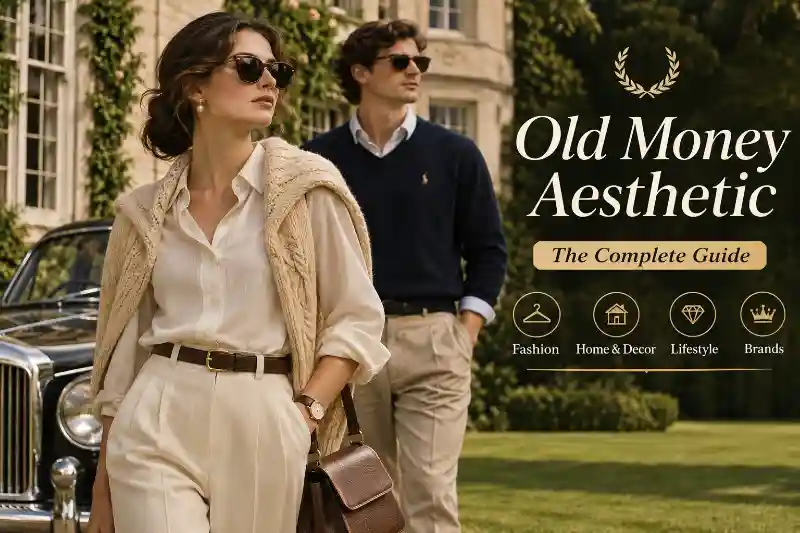
You’ve probably seen the old money aesthetic all over Pinterest, TikTok, or Instagram. Cream sweaters, tailored pants, polished loafers, and simple outfits that somehow look expensive without trying too hard.
But what does old money aesthetic actually mean? And do you need expensive clothes to dress this way?
Not at all.
The old money aesthetic is a fashion style built around timeless clothing, soft colors, neat fits, and subtle details. It takes inspiration from classic wardrobes and traditional luxury rather than flashy trends.
The good news? You can create this look with clothes you already own.
In this guide, we’ll explain what old money style means, how to recognize it, how to create classic outfits for different personal styles, and how to get the look on a budget. We’ll also explore its history, popular brands, darker variations, and home decor ideas.
FIND YOUR AGE - IN YEARS, MONTHS, DAYS, HOURS & SECONDS!
What Is the Old Money Aesthetic?
The old money aesthetic is a classic fashion and lifestyle style inspired by traditional wealth, understated elegance, and timeless design. It focuses on well-fitting clothes, neutral colors, quality-looking fabrics, and simple accessories instead of oversized logos or attention-grabbing trends.
The term old money originally refers to wealth passed down through generations of a family.
The aesthetic is different. It’s a modern way of dressing and decorating that takes inspiration from the clothing, homes, and traditions often associated with established wealthy families.
You don’t need to come from a wealthy family to enjoy the style.
Think of someone wearing a white button-down shirt, beige trousers, a navy blazer, and brown loafers. Nothing looks overly decorated, but the outfit feels neat and balanced.
That’s the basic idea.
What Makes an Outfit Look Old Money?
An old money-inspired outfit usually has a few recognizable features:
- Classic clothing: Oxford shirts, blazers, sweaters, tailored pants, and simple dresses.
- Quiet colors: Beige, cream, navy, gray, brown, and white.
- Good fit: Clothes that sit comfortably and look neat.
- Simple accessories: Leather belts, small earrings, classic watches, and loafers.
- Minimal branding: Little or no large, visible logos.
- Balanced styling: Pieces that work together without competing for attention.
You know that feeling when an outfit looks put together, even though it’s made from basic clothing?
That’s what this style tries to achieve.
It isn’t about proving you’re rich. It’s about choosing clothes that look natural, polished, and easy to wear.
Where Did the Old Money Aesthetic Come From?
The old money aesthetic didn’t begin with TikTok. Its fashion influences go back much further.
Traditional upper-class wardrobes often included tailored clothing, practical luxury fabrics, and outfits suited to activities such as tennis, sailing, horseback riding, and formal gatherings.
Over time, these clothing traditions helped shape what people now recognize as old money fashion.
From Heritage Fashion to Modern Style
Several fashion traditions helped influence the modern look.
American East Coast prep brought Oxford shirts, polo shirts, chinos, blazers, and loafers into the picture.
Ivy League style helped popularize sweaters, tailored jackets, and smart casual clothing.
British country fashion contributed tweed, wool coats, riding-inspired pieces, and darker colors.
European classic tailoring added structured jackets, fine knitwear, and carefully fitted clothing.
These traditions developed at different times, so there isn’t one exact year when the entire old money aesthetic began.
The modern internet trend is much newer.
Why Is Gen Z So Interested in the Old Money Aesthetic?
Old money fashion became especially visible on social media around 2023, alongside the popularity of quiet luxury and stealth wealth.
Pinterest mood boards, TikTok outfit videos, and celebrity fashion helped introduce the style to younger audiences.
Shows like Succession, with their understated luxury wardrobes, also added to the conversation. Sofia Richie Grainge’s wedding style became another widely discussed reference.
But people don’t all follow this aesthetic for the same reason.
Some like the clean outfits. Others enjoy vintage fashion, classic European-inspired looks, or the idea of owning fewer clothes that work together.
And some simply want a break from fast-changing fashion trends.
The style also has complicated historical associations with class and exclusivity. Enjoying a classic blazer or pair of loafers doesn’t mean you need to copy those social attitudes.
The Five Elements of Old Money Style
If you’re trying to create the old money aesthetic, buying random beige clothing won’t automatically give you the right look.
A few simple styling choices matter much more.
1. Neutral Colors That Work Together
Color is one of the easiest ways to recognize old money aesthetic fashion.
Popular shades include:
| Color | How to Wear It |
|---|---|
| Cream and ivory | Sweaters, blouses, trousers |
| Beige and camel | Chinos, coats, skirts |
| Navy blue | Blazers, sweaters, dresses |
| White | Shirts, polos, summer clothing |
| Gray | Wool trousers, jackets |
| Brown | Shoes, belts, bags |
| Forest green | Knitwear, coats, accessories |
| Burgundy | Sweaters, scarves, small accents |
You don’t need to use every color.
Start with two neutral shades and add one darker color.
For example, cream trousers, a white shirt, and a navy blazer create a simple, balanced outfit.
Black can work too. The idea that old money fashion only allows beige and white is a common misunderstanding.
2. Classic Fabrics and Natural Textures
Fabric can change how an outfit looks and feels.
Common choices include cotton, linen, wool, cashmere, silk, tweed, and leather.
A cotton Oxford shirt looks neat without being too formal. Linen trousers feel comfortable in warm weather. Wool sweaters add texture to winter outfits.
You don’t need pure cashmere or expensive silk.
A well-made cotton sweater can look better than a poorly fitted designer sweater.
Check the fabric’s feel, stitching, thickness, and care instructions instead of relying only on its name.
3. Tailored Fits and Timeless Shapes
Fit matters more than the price tag.
An oversized jacket with awkward shoulders may make your outfit look untidy. Trousers that bunch heavily around your shoes can have the same effect.
Try to choose clothing that:
- Fits comfortably around your shoulders and waist.
- Allows you to move naturally.
- Has the length and shape you prefer.
- Looks balanced with the other items you’re wearing.
Old money style doesn’t require tight or slim clothing. Relaxed trousers, roomy shirts, and soft knitwear can work beautifully when the proportions feel intentional.
4. Subtle Accessories and Minimal Branding
Accessories should finish your outfit, not take it over.
A leather belt, small gold earrings, pearl studs, or a simple watch can add personality without making the look too busy.
Large designer logos aren’t necessary.
In fact, a plain, well-kept bag often fits this aesthetic better than one covered in branding.
5. Clothes That Stay Useful Beyond One Season
One of the strongest ideas behind old money-inspired dressing is choosing clothing you can wear again and again.
A navy blazer might work with trousers, jeans, or a skirt.
A cream sweater can be worn over a collared shirt or paired with tailored pants.
This doesn’t mean you can never wear trends. It simply means having a few reliable pieces makes dressing easier.
Old Money Aesthetic Clothes: What Belongs in Your Wardrobe?
You don’t need a completely new wardrobe to start.
The easiest approach is to identify a few classic items and see what you already own.
Shirts, Polos, and Knitwear
A white Oxford shirt is one of the most versatile pieces.
You can wear it tucked into trousers, under a sweater, or open over a plain T-shirt for a relaxed look.
Polo shirts work well for casual outfits, especially in white, navy, cream, or soft blue.
Cable-knit sweaters add a traditional preppy touch. Plain crew-neck sweaters and cardigans offer a simpler option.
Choose pieces that feel comfortable and suit your everyday routine.
Blazers, Coats, and Trousers
A navy blazer is a useful starting point, but you don’t have to buy one immediately.
Other classic wardrobe pieces include:
- Beige chinos
- Straight-leg tailored trousers
- Pleated pants
- Wool coats
- Trench coats
- Simple midi skirts
- Structured jackets
For warm weather, lighter cotton or linen pieces can replace heavier wool clothing.
The goal is to build combinations, not collect every traditional fashion item.
Shoes, Bags, and Everyday Accessories
Shoes make a noticeable difference.
Leather loafers are popular in old money outfits, but ballet flats, simple boots, and clean, understated sneakers can also work.
A structured handbag or plain leather crossbody bag is a useful option.
For jewelry, try small gold or silver pieces, pearl earrings, or a classic-looking watch.
Here’s a simple starter checklist:
| Wardrobe Item | Why It Works | Affordable Alternative |
|---|---|---|
| White Oxford shirt | Easy to dress up or down | Cotton button-down |
| Navy blazer | Adds structure | Secondhand blazer |
| Cream sweater | Works across seasons | Cotton crew-neck knit |
| Beige trousers | Easy color matching | Neutral chinos |
| Loafers | Classic footwear | Secondhand leather loafers |
| Leather-style belt | Finishes an outfit | Plain, well-made belt |
| Simple bag | Keeps the outfit balanced | Structured unbranded bag |
You only need the pieces that work with your lifestyle. Don’t buy something just because it appears on an aesthetic checklist.
Old Money Aesthetic Outfits for Women
The old money aesthetic for women doesn’t mean wearing formal dresses every day.
It can be casual, comfortable, and easy to put together.
The secret is choosing simple clothing combinations that look balanced.
Casual Old Money Outfits for Everyday Wear
Outfit 1: Cream sweater and beige trousers
Wear a cream knit sweater with straight beige trousers, brown loafers, and a small leather bag.
This is a simple option for college, coffee dates, or a relaxed day out.
Outfit 2: White shirt and dark jeans
Pair a white button-down shirt with straight-leg dark blue jeans and ballet flats.
Add a brown belt or a lightweight cardigan.
Jeans may feel less traditional, but they work in a modern old money-inspired outfit when the styling stays simple.
Outfit 3: Polo shirt and pleated skirt
Choose a navy or white polo shirt with a knee-length or midi pleated skirt.
Finish with loafers and small earrings.
It gives a classic preppy look without needing expensive pieces.
Elegant Old Money Outfits for Work and Events
For a more polished outfit, try a beige blazer with tailored trousers and a white blouse.
A navy midi dress with simple flats or low heels is another easy option.
You can also wear a silk-style blouse with a neutral skirt and a structured bag.
Avoid adding too many statement accessories.
One watch, a simple necklace, or small earrings may be all you need.
Summer and Winter Outfit Ideas for Women
Summer old money outfits work best with breathable clothes.
Try a linen button-down, cream trousers, and flat sandals. A simple cotton dress with a woven bag is another option.
Soft blue, ivory, and beige are easy summer colors.
Winter old money outfits are all about layering.
A wool coat over a fitted sweater and tailored trousers creates a classic look.
You can also wear a cardigan with a collared shirt, straight-leg pants, and leather boots.
Dark navy, chocolate brown, charcoal, and burgundy are especially useful for colder months.
Old Money Aesthetic Outfits for Men
Old money aesthetic outfits for men often combine classic tailoring with relaxed everyday clothing.
You don’t need to wear a suit or tie everywhere.
A simple shirt, well-fitting trousers, and clean shoes can be enough.
Casual Old Money Outfits for Men
Outfit 1: Oxford shirt and chinos
Wear a light blue Oxford shirt with beige chinos and brown loafers.
Roll the sleeves slightly if you prefer a relaxed look.
Outfit 2: Navy polo and cream trousers
This combination works well in warmer weather.
Add a brown belt and simple loafers or clean leather sneakers.
Outfit 3: Sweater over a collared shirt
Layer a cream or navy crew-neck sweater over a white shirt.
Pair it with gray or beige trousers.
It’s a classic combination that works for college, dinner, or a smart casual event.
Smart Casual and Formal Old Money Looks
For a dressier outfit, pair a navy blazer with light gray trousers and a white shirt.
A fine-knit sweater under a tailored jacket also works.
If you need a suit, choose a fit and color that suit the occasion rather than assuming every old money outfit must look formal.
Navy, charcoal, and medium gray are versatile choices.
A plain tie and polished shoes can finish the look.
Men’s Summer and Winter Outfit Ideas
For summer, choose lightweight cotton shirts, polos, linen trousers, and comfortable loafers.
You can also try a simple short-sleeve knit polo with neutral chinos.
During winter, combine wool trousers with a sweater and structured coat.
A forest-green sweater with gray trousers and brown leather shoes is another good option.
Keep layers comfortable. You don’t need to wear several heavy pieces just to look polished.
How to Dress Old Money Aesthetic Without Overthinking It
Knowing which clothes belong to this aesthetic is helpful. But putting them together is where most beginners get stuck.
Here’s an easy way to build an outfit without buying anything new.
Step 1: Start with One Classic Piece You Already Own
Open your closet and pick one item.
It could be a white shirt, navy sweater, beige trousers, or plain blazer.
Use that piece as the starting point.
For example, if you already have a cream sweater, you can build the rest of the outfit around it.
Step 2: Choose Two or Three Colors
Keep the color combination simple.
Try cream, navy, and brown.
Or white, beige, and gray.
A small color palette makes it easier to mix your clothes without spending too much time choosing.
You don’t need everything to match perfectly. The colors just need to look good together.
Step 3: Check the Fit and Proportions
Put the outfit on and look at how it sits.
If your sweater is loose, straight or more structured trousers might balance it.
If your blazer has a relaxed shape, consider a cleaner silhouette underneath.
Check the sleeves, waist, and trouser length.
Small adjustments can make ordinary clothes look much better.
Step 4: Finish with Shoes and Accessories
Choose shoes that match the overall outfit.
Loafers work well with tailored trousers. Ballet flats can suit dresses and skirts. Clean, simple sneakers are fine for casual combinations.
Add one or two accessories if you want.
Then stop.
You don’t need a watch, scarf, sunglasses, pearl necklace, belt, and designer bag all in the same outfit.
A Five-Minute Old Money Outfit
Here’s a quick example:
- White button-down shirt
- Beige trousers
- Brown belt
- Brown loafers
- Simple watch
That’s it.
The outfit works because the pieces are familiar, the colors are balanced, and nothing feels excessive.
How to Achieve the Old Money Aesthetic on a Budget
One of the biggest misunderstandings about old money style is that everything must be expensive.
You may see cashmere sweaters, luxury handbags, and designer coats in inspiration photos.
But copying the overall style doesn’t require copying the prices.
Shop Your Closet Before Buying Anything
Start with clothes you already have.
Look for plain shirts, neutral sweaters, trousers, cardigans, and simple shoes.
You might already own enough pieces to create several outfits.
Try different combinations before shopping.
This also helps you figure out what’s actually missing.
Find Quality Pieces at Thrift Stores and Sales
Thrift stores, consignment shops, resale platforms, and end-of-season sales can be useful.
Look for classic pieces rather than clothing labeled “old money.”
A secondhand navy blazer or wool sweater might fit your style better than a new item marketed around the trend.
Before buying, check:
- Are the seams secure?
- Is the fabric damaged or heavily worn?
- Does the item fit comfortably?
- Can you care for it properly?
- Will it match at least two or three things you own?
A low price isn’t a bargain if the item stays in your closet.
Build a Small Wardrobe That Creates More Outfits
You can start with just a few useful items.
For example:
- One white or light blue shirt
- One neutral sweater
- One pair of beige or gray trousers
- One pair of dark jeans
- One classic jacket or blazer
- One pair of simple shoes
- One belt or everyday bag
These pieces can create different combinations for casual and slightly dressier situations.
You can add more over time.
Think about cost per wear, too.
If you wear a $50 sweater fifty times, it costs about $1 per wear. A $20 sweater worn only twice costs $10 per wear.
That doesn’t mean expensive clothing is always better. It means choosing items you’ll actually use can be smarter than buying more clothes.
Where to Shop for Old Money Aesthetic Clothes
If you’re searching for old money aesthetic clothes online, don’t worry about finding a store that uses that exact label.
Many regular clothing retailers sell suitable basics.
Focus on the item, fabric, fit, and price.
Affordable Stores for Classic Wardrobe Basics
For shoppers in the United States, stores worth checking include:
Uniqlo: Simple knitwear, shirts, trousers, and neutral basics.
J.Crew: Preppy clothing, button-down shirts, sweaters, blazers, and chinos.
Gap: Everyday cotton shirts, sweaters, and relaxed classic clothing.
Quince: Minimal wardrobe basics and items made with materials commonly associated with understated luxury.
Product ranges, prices, and availability change, so compare individual items rather than assuming a store is always affordable.
You can also check secondhand marketplaces for older pieces from these brands.
What Brands Fit the Old Money Aesthetic?
Some brands are strongly associated with classic, heritage-inspired, or understated luxury fashion.
Ralph Lauren is known for American preppy clothing, polo shirts, sweaters, and tailored looks.
Brooks Brothers has a long connection with American classic clothing, including Oxford shirts and traditional tailoring.
Loro Piana is associated with luxury fabrics and restrained designs.
Brunello Cucinelli is known for refined Italian clothing and understated luxury styling.
These brands can provide inspiration, but you don’t have to buy them.
Also, not every product from these brands fits the same aesthetic.
A simple, well-fitting shirt from a less expensive brand can work just as well for the look you’re trying to create.
What to Check Before Buying Online
Before ordering, read the product description carefully.
Look at fabric composition, garment measurements, return policies, and care instructions.
Check customer photos when available.
An item can look perfect in a styled product photo but fit differently in real life.
If you’re unsure about sizing, compare the listed measurements with clothes you already own.
That small step can save you a disappointing purchase.
Dark and Vintage Old Money Aesthetic Styles
Not every old money aesthetic outfit has to be light beige or cream.
There are different ways to interpret the style.
Two popular variations are dark old money and vintage old money.
Dark Old Money Aesthetic
The dark old money aesthetic uses deeper colors and richer textures while keeping classic clothing shapes.
Common shades include:
- Forest green
- Chocolate brown
- Charcoal gray
- Deep navy
- Burgundy
- Black
For example, you could wear charcoal trousers with a burgundy sweater and dark brown loafers.
Another option is a forest-green knit sweater with a navy coat and black trousers.
Dark wool coats, structured bags, and leather accessories can strengthen the look.
This style sometimes overlaps visually with dark academia, especially when it uses tweed, old libraries, and darker clothing.
But they’re not exactly the same. Dark academia often emphasizes academic and literary themes, while dark old money styling focuses more on classic luxury-inspired clothing.
Vintage Old Money Aesthetic
Vintage old money aesthetic fashion takes inspiration from older clothing styles and heritage pieces.
Think tweed jackets, traditional cardigans, pleated trousers, vintage watches, and leather bags.
You can create the look with genuine secondhand clothing or newer pieces with classic designs.
Try a vintage-inspired cardigan with straight trousers and loafers.
Or wear a tweed jacket over a plain shirt with dark jeans.
The key is not making everything look like a costume.
Mixing one vintage piece with modern basics usually feels more natural than dressing entirely around a historical theme.
Old Money Aesthetic Beyond Fashion: Home, Beauty, and Events
The old money aesthetic isn’t limited to clothing.
People also use the term when searching for bedroom ideas, home decor, nail designs, weddings, and even phone wallpapers.
These interpretations share a preference for classic details and a sense of history.
Old Money Aesthetic Home Decor and Bedroom Ideas
Old money aesthetic decor often uses traditional furniture, warm textures, and objects that feel collected over time.
Popular features include dark wood, antique-style mirrors, framed artwork, brass lamps, bookshelves, and patterned fabrics.
A room doesn’t need to look like a mansion.
If you want an old money aesthetic bedroom, try starting with neutral bedding, a warm bedside lamp, and a wooden side table.
Add framed artwork or a vintage-style mirror.
For a darker room, forest-green cushions, a burgundy throw, or dark wood accents can work well.
The idea is to make the space feel comfortable and lived in, rather than filling it with expensive decorations.
An old money aesthetic house may use similar ideas throughout its living room, study, and dining spaces.
You can still mix in modern furniture. A home that reflects your personality will usually feel better than one designed only to copy a mood board.
Old Money Aesthetic Nails and Beauty Details
Old money aesthetic nails are usually associated with clean, understated manicures.
Popular ideas include:
- Sheer pink nails
- Nude or beige polish
- Short, neatly shaped nails
- A simple French manicure
- Classic red or deep burgundy polish
These aren’t strict rules. They’re just easy ways to match the overall fashion style.
For hair, simple buns, soft waves, low ponytails, and neat everyday styles can work.
Natural-looking makeup is another common choice, but you don’t need makeup to achieve the aesthetic.
Old Money Aesthetic Wedding Inspiration
An old money aesthetic wedding often focuses on classic clothing, simple colors, and traditional decor.
For outfits, think timeless suits, elegant dresses, and understated accessories.
For decorations, consider white flowers, candlelight, greenery, classic table settings, and soft neutral colors.
An elegant atmosphere doesn’t require an expensive venue.
A small wedding with thoughtful details can work just as well.
Old Money Aesthetic Wallpaper and Digital Inspiration
If you’re searching for old money aesthetic wallpaper for your phone or computer, look for images with classic architecture, libraries, gardens, vintage cars, or neutral fashion.
Other ideas include country estates, antique interiors, tennis courts, and carefully arranged clothing flat lays.
These images can also help you create a Pinterest mood board.
Just remember that a mood board is inspiration, not a shopping checklist.
Old Money vs. Quiet Luxury, Preppy, and New Money Style
These terms often appear together online, so it’s easy to confuse them.
They share some clothing ideas, but their meanings aren’t identical.
| Style | Main Idea | Typical Clothing |
|---|---|---|
| Old money aesthetic | Heritage-inspired, classic, understated appearance | Blazers, loafers, knits, tailored trousers |
| Quiet luxury | Subtle design, materials, and restrained branding | Simple coats, fine knitwear, minimal clothing |
| Preppy style | Collegiate and sporty classic fashion | Polos, chinos, rugby shirts, sweaters |
| New money aesthetic | Often portrayed online as bold and visibly luxurious | Statement pieces, prominent logos, trend-led outfits |
Old money vs. quiet luxury: Quiet luxury focuses on subtle design, quality materials, and minimal branding. The old money aesthetic shares these features but draws more inspiration from traditional clothing and heritage fashion.
Old money vs. preppy: Preppy fashion takes inspiration from classic school and college clothing, including polo shirts, chinos, and sweaters. You’ll find similar pieces in old money outfits, often styled with more tailored and elegant details.
Old money vs. new money: These terms originally describe different relationships to wealth. In fashion, people often associate new money with bold luxury and visible branding, while old money style favors a more understated appearance. However, these are popular stereotypes, not reliable ways to judge someone’s background or taste.
There is plenty of overlap.
A navy blazer with beige trousers could fit old money, preppy, and quiet luxury styling depending on the rest of the outfit.
You don’t have to choose only one label.
Common Mistakes That Make Old Money Outfits Look Forced
Trying too hard can make a simple aesthetic feel complicated.
Here are some common mistakes and easy ways to avoid them.
Wearing Too Many Designer Logos
Large logos can draw attention away from the clean look you’re trying to create.
Easy fix: Choose simpler pieces or let one branded item be the focus.
Copying an Entire Outfit Without Thinking About Your Lifestyle
A heavy blazer, formal trousers, and loafers may look great in a photo but feel uncomfortable in hot weather.
Easy fix: Adapt the outfit. Use cotton, linen, or lighter layers when needed.
Ignoring Fit and Comfort
Expensive clothing doesn’t automatically look polished.
Easy fix: Check proportions, choose comfortable sizes, and consider simple alterations for pieces you wear often.
Wearing Only Beige
Beige is common in old money aesthetic outfits, but it isn’t the only option.
Easy fix: Experiment with navy, gray, brown, muted green, burgundy, and white.
Buying Too Many Pieces at Once
You don’t need a whole new wardrobe to follow a style.
Easy fix: Start with one or two missing pieces and build outfits from what you already own.
Adding Every Classic Accessory
Pearls, scarves, watches, sunglasses, belts, and structured bags can all look good individually.
Together, they may overwhelm a simple outfit.
Easy fix: Choose accessories that add something useful to your look.
Is the Old Money Aesthetic Right for Your Personal Style?
The old money aesthetic might suit you if you enjoy simple outfits, classic colors, and clothes that can be worn in different ways.
It’s especially useful if you want a wardrobe where pieces are easy to match.
But you don’t need to follow every rule.
Maybe you love bright sneakers, oversized hoodies, or colorful bags. You can still wear a classic blazer or a cream sweater with those pieces.
Personal style should feel like yours.
If you like the aesthetic but don’t want to change everything, start small.
Try a white Oxford shirt with your favorite jeans. Add a cardigan to an outfit you already wear. Replace one worn-out basic with a piece you’ll use regularly.
See what feels comfortable before buying more.
The best version of this style isn’t the one that looks most expensive.
It’s the one you can actually enjoy wearing.
Frequently Asked Questions About the Old Money Aesthetic
What colors are considered old money aesthetic?
Common old money aesthetic colors include cream, ivory, beige, camel, navy, gray, brown, white, forest green, and burgundy. These shades are popular because they’re easy to combine into classic outfits.
Can you dress old money without being rich?
Yes. Old money aesthetic fashion is about styling, not proving your wealth. You can create the look with affordable basics, secondhand clothing, neutral colors, and well-fitting outfits.
Can jeans be part of an old money aesthetic outfit?
Yes. Straight-leg jeans in a dark, simple wash can work with an Oxford shirt, blazer, cardigan, or loafers. They’re a more casual interpretation of the style.
Is the old money aesthetic still popular?
The modern trend became especially visible in 2023, but many of its clothing pieces have been worn for decades. Even when the social media label becomes less popular, classic shirts, blazers, and tailored trousers can remain useful wardrobe choices.
Is old money aesthetic the same as quiet luxury?
Not exactly. Both styles favor understated clothing and minimal branding. Old money aesthetic places more emphasis on traditional, heritage-inspired outfits, while quiet luxury generally focuses on restrained design and subtle luxury.
A Classic Style You Can Make Your Own
The old money aesthetic isn’t really about owning expensive things. It’s about creating a polished look with classic clothing, thoughtful color combinations, and simple details.
You can enjoy the style without pretending to have a wealthy background or changing your entire wardrobe.
Start with a shirt, sweater, or pair of trousers you already own. Try a new combination, check the fit, and add one accessory you genuinely like.
That’s a much easier way to approach old money fashion than buying everything you see online.
And in the end, the most useful wardrobe is one that feels comfortable, suits your everyday life, and still looks good long after a trend has passed.
BMI & BMR CALCULATOR - CHECK YOUR HEALTH