Have you ever felt so exhausted that even simple daily tasks seem impossible? Maybe talking to friends takes too much energy. Sounds that never bothered you before suddenly feel unbearable. Or you wake up tired, even after a full night of sleep.
For some autistic people, these changes may be signs of autistic burnout.
It is more than feeling tired after a busy week. Autistic burnout can affect your energy, emotions, communication, and ability to manage everyday life.
But how can you tell if you are experiencing it? And what can help you feel better?
This guide explains what autistic burnout is, its common symptoms, what causes it, how it differs from depression and ADHD burnout, and practical ways to support recovery.
FIND YOUR AGE - IN YEARS, MONTHS, DAYS, HOURS & SECONDS!
What Is Autistic Burnout?
Autistic burnout is a period of deep physical, mental, and emotional exhaustion that can happen when an autistic person faces too much stress without enough support or recovery time.
It can make everyday activities harder and increase sensitivity to sounds, lights, social situations, and other sensory experiences.
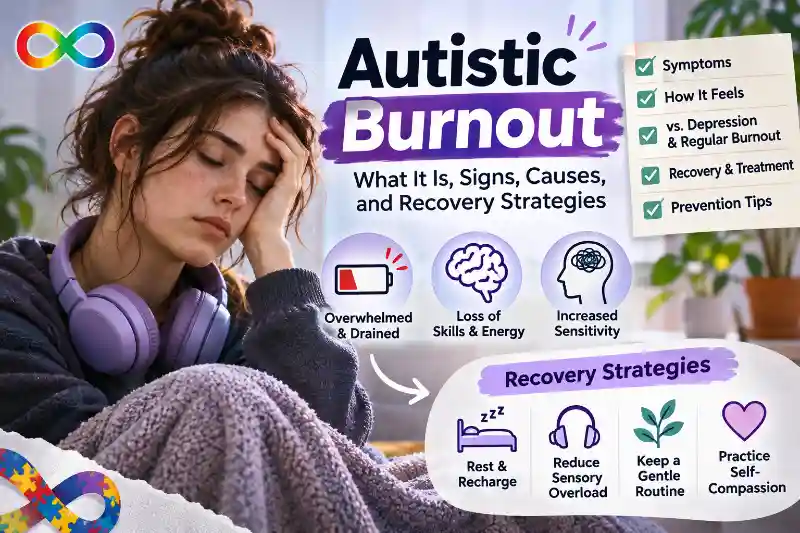
Researchers often describe three main features:
- Long-lasting exhaustion: Feeling drained physically, mentally, or emotionally.
- Reduced ability to function: Finding tasks difficult that used to feel manageable.
- Increased sensory sensitivity: Becoming overwhelmed more easily by noise, light, touch, or busy environments.
A 2020 study led by researcher Dora Raymaker explored autistic adults’ experiences and found these three features repeatedly appeared in descriptions of burnout.
The study also connected burnout with ongoing life demands that exceeded people’s available energy and support.
Autistic burnout is a real and increasingly researched experience, although it is not currently a separate official medical diagnosis.
Is Autistic Burnout Different From Feeling Tired?
Yes. There is an important difference.
Normal tiredness often improves after enough rest. You might feel exhausted after a long day at work, but recover after sleeping or taking a break.
Autistic burnout can be more widespread.
For example, an autistic college student might attend classes, complete assignments, and manage social situations throughout the week. Over time, these demands may become too much.
Eventually, attending one class or answering a message may feel overwhelming.
Even a quiet weekend may not be enough to restore their usual energy.
That does not mean rest is useless. It means recovery may require both rest and changes to the demands causing the exhaustion.
What Are the Signs and Symptoms of Autistic Burnout?
The symptoms of autistic burnout can look different from person to person.
Some people notice physical exhaustion first. Others experience changes in communication, sensory sensitivity, or their ability to complete daily tasks.
You do not need to experience every symptom, and these signs alone cannot confirm autistic burnout.
1. Physical and Mental Exhaustion
One of the most common signs of autistic burnout is feeling tired almost all the time.
This exhaustion can affect both your body and your mind.
You might notice:
- Feeling drained when you wake up.
- Needing more recovery time after social activities.
- Having trouble concentrating.
- Finding decisions harder than usual.
- Feeling mentally exhausted after routine tasks.
- Struggling to keep up with responsibilities.
For example, someone who usually enjoys cooking might suddenly find choosing ingredients, preparing food, and cleaning up too demanding.
The difficulty is not necessarily a lack of motivation. Their available energy may be much lower than usual.
2. Increased Sensory Overload
Many autistic people experience sensory differences, but burnout may make everyday sensory input even harder to manage.
Things that previously felt tolerable can become overwhelming.
Common examples include:
- Bright lights feeling uncomfortable.
- Background conversations becoming distracting.
- Loud noises causing stronger distress.
- Crowded spaces feeling unbearable.
- Certain clothing textures becoming harder to tolerate.
- Needing more quiet time after leaving the house.
Imagine someone who usually manages a busy grocery store without much trouble.
During burnout, the same store’s music, bright lights, moving carts, and conversations might become too much.
This increased sensory sensitivity can make ordinary errands difficult.
3. Trouble With Everyday Tasks and Communication
Autistic burnout can affect a person’s ability to access skills they normally use.
This may involve executive functioning, which includes planning, remembering steps, organizing information, and starting tasks.
Possible changes include:
- Forgetting appointments more often.
- Struggling to complete household chores.
- Finding it difficult to start assignments.
- Having trouble organizing thoughts.
- Needing extra time to understand instructions.
- Finding speaking or answering questions harder.
- Depending more on support for daily activities.
For some people, even getting dressed or preparing a meal may require more effort.
Researchers sometimes call this a loss of skills or reduced functioning. It does not mean the person has stopped being capable or that every change will be permanent.
However, sudden or major changes in speech, movement, or other abilities should be medically assessed rather than automatically blamed on burnout.
4. Emotional Changes, Shutdowns, and Social Withdrawal
Autistic burnout can also affect emotional regulation.
You may feel overwhelmed more quickly, have less patience, or need more time alone.
Some people experience more frequent autistic shutdowns or meltdowns.
A shutdown may involve becoming quiet, finding communication difficult, or temporarily withdrawing when overwhelmed.
A meltdown is a response to overwhelming distress that may involve crying, intense emotion, or difficulty controlling outward reactions.
These experiences are not the same as autistic burnout. However, increased overload during burnout may make them more likely for some people.
Social withdrawal can also happen.
Someone who normally enjoys spending time with friends may stop responding to messages because even a short conversation requires too much energy.
What Does Autistic Burnout Feel Like in Adults?
If you are searching for the signs of autistic burnout in adults, you may be wondering what it actually feels like in everyday life.
A useful way to understand it is to imagine your energy as a phone battery.
You start the day with a limited charge. Work, school, communication, sensory input, and household tasks all use some of that energy.
During burnout, it may feel as if your battery is already nearly empty before the day begins.
You still want to do things, but you cannot manage everything you normally would.
This is only a comparison, not a medical explanation. Still, it helps describe why people sometimes refer to autistic burnout as feeling like their battery is dead.
What Burnout May Look Like at Work, College, or Home
Consider these fictional examples.
At work: An autistic employee who usually handles emails and meetings begins struggling to follow conversations. By the end of the workday, making dinner feels impossible.
At college: A student who previously managed classes and assignments starts missing deadlines. Loud classrooms become harder to tolerate, and concentrating takes more effort.
At home: An autistic adult who normally keeps an organized routine starts forgetting chores, avoiding phone calls, and needing more help with daily responsibilities.
These situations do not prove someone has autistic burnout. They show how reduced energy and functioning may appear in different parts of life.
Why Autistic Burnout Can Be Hard for Others to Notice
Some autistic adults have spent years learning how to hide their discomfort in social settings.
This is often called autistic masking, or camouflaging.
A person may appear calm, friendly, and productive at school or work while using a great deal of energy to maintain that appearance.
Later, they may feel completely exhausted.
This can be especially confusing for people who were diagnosed with autism later in life.
Others may have become used to seeing them manage difficult situations and may not realize how much effort those situations require.
Burnout is not always obvious from the outside.
What Causes Autistic Burnout?
There is no single cause of autistic burnout.
Research suggests it often develops when ongoing stress, social expectations, sensory demands, and insufficient support build up over time.
A 2025 systematic review of 48 studies involving approximately 4,000 autistic people identified several possible contributing factors, including camouflaging, sensory overload, social difficulties, stigma, and everyday demands.
Masking Autistic Traits for Too Long
Autistic masking happens when someone changes or hides natural behaviors to meet social expectations.
For example, a person might:
- Force eye contact even when uncomfortable.
- Hide repetitive movements or stimming.
- Carefully rehearse conversations.
- Suppress signs of sensory distress.
- Copy other people’s social behavior.
Masking can sometimes help people navigate situations where they feel unsafe or misunderstood.
However, doing it constantly may require considerable effort.
Over time, that effort may contribute to chronic exhaustion.
Not every autistic person masks, and masking does not automatically cause burnout. But research suggests it can be an important factor.
Sensory Overload and Constant Social Demands
Busy environments can require a great deal of energy.
Think about working in an open office with ringing phones, bright lights, conversations, and frequent interruptions.
For someone with sensory sensitivities, managing that environment every day may be exhausting.
Social demands can add another layer.
Meetings, group projects, unexpected conversations, and pressure to respond quickly can all increase the mental load.
When a person has little time to recover, the stress may build up.
Major Life Changes and Unmet Support Needs
Autistic burnout can also happen during major life transitions.
Examples include:
- Starting college.
- Moving to a new home.
- Beginning a demanding job.
- Changing daily routines.
- Managing family responsibilities.
- Experiencing relationship difficulties.
- Losing access to familiar support.
Sometimes the problem is not one major event.
It is the combined weight of several demands that have become difficult to manage.
Limited workplace accommodations, financial pressure, and a lack of understanding from others can make these situations even harder.
Some autistic people also experience alexithymia, which means difficulty identifying or describing emotions. This may make it harder to notice rising stress or explain the need for support.
Autistic Burnout vs. Depression, ADHD Burnout, and Regular Burnout
Autistic burnout can share symptoms with depression, ADHD-related exhaustion, and ordinary work burnout.
That overlap can make it difficult to know what is happening.
Here is a simple comparison.
| Experience | Common features | Important distinction |
|---|---|---|
| Autistic burnout | Long-term exhaustion, sensory sensitivity, reduced functioning | Often linked to ongoing demands and inadequate support across different parts of life |
| Depression | Low mood or loss of interest, sleep or appetite changes, reduced energy | A recognized mental health condition with its own diagnostic criteria |
| Regular work burnout | Job-related exhaustion, cynicism or mental distance from work, reduced effectiveness | Specifically tied to workplace stress in the WHO definition |
| ADHD-related burnout | Exhaustion, difficulty organizing tasks, emotional overload | An informal term that may describe exhaustion related to ADHD challenges |
| Autistic shutdown | Reduced communication or withdrawal during overwhelm | Often a more immediate response rather than a prolonged burnout state |
These are general patterns, not a diagnostic checklist.
Autistic Burnout vs. Depression
One of the most common questions is whether autistic burnout and depression are the same.
They are not identical, but they can overlap.
An autistic person experiencing burnout may still want to enjoy hobbies, socialize, or complete activities but feel unable to manage the demands.
Someone experiencing depression may also have low energy, but depression can include persistent low mood, feelings of worthlessness, or a loss of interest and pleasure.
These differences are not reliable enough to diagnose yourself.
You can experience autistic burnout and depression at the same time.
In fact, research on autistic burnout measures has found associations between burnout symptoms, depression, and anxiety.
If your symptoms are persistent or affecting your life, a qualified healthcare professional can help assess possible causes.
ADHD Burnout vs. Autistic Burnout
ADHD stands for Attention-Deficit/Hyperactivity Disorder.
People with ADHD may experience exhaustion related to difficulties with planning, attention, emotional regulation, or managing repeated demands.
Autistic burnout may involve similar difficulties, along with changes in sensory tolerance, communication, and access to everyday skills.
Some people have both autism and ADHD. The informal term AuDHD is often used to describe this combination.
For someone with AuDHD, multiple types of stress may interact.
It is not always possible to separate ADHD-related exhaustion from autistic burnout based on symptoms alone.
Autistic Burnout vs. Regular Burnout
Regular burnout is often discussed in relation to work.
The World Health Organization describes occupational burnout as a response to chronic workplace stress that has not been successfully managed.
Autistic burnout can involve work, but it may also affect home life, relationships, school, sensory experiences, and daily functioning.
For example, leaving a stressful job may remove one major pressure without solving every difficulty associated with autistic burnout.
Both experiences deserve attention, and neither should be dismissed.
How to Recover From Autistic Burnout
If you are wondering how to recover from autistic burnout, the first thing to understand is that recovery is not about forcing yourself to become productive again as quickly as possible.
Autistic burnout recovery often involves reducing overwhelming demands, getting enough rest, understanding your support needs, and changing parts of your environment that contribute to stress.
There is no single proven treatment that works for everyone.
However, autistic adults in research studies have described several approaches that helped them manage burnout.
1. Start by Reducing Demands, Not Pushing Harder
When you feel exhausted, you may try to keep doing everything as usual.
But if your daily demands are already higher than your available energy, constantly pushing harder may make things worse.
Start by asking yourself:
What do I really need to do today, and what can wait?
For example:
- Delay nonurgent tasks.
- Reduce unnecessary appointments.
- Ask someone to help with shopping.
- Choose simpler meals.
- Limit optional social commitments.
- Break larger tasks into smaller steps.
You may not be able to stop working, studying, or caring for others.
That is okay. The goal is to reduce avoidable pressure where you can.
Try to protect enough time for rest without treating rest as another task you must perform perfectly.
2. Create a Lower-Sensory Recovery Environment
If sensory overload is making burnout harder, changing your surroundings may help.
You could try:
- Dimming bright lights.
- Using earplugs or noise-reducing headphones.
- Wearing comfortable clothing.
- Taking breaks in quiet spaces.
- Reducing unnecessary background noise.
- Choosing less crowded shopping hours.
Your sensory preferences matter.
Some people feel better in a quiet, dark room. Others prefer gentle music, movement, or familiar background sounds.
There is no perfect sensory environment for every autistic person.
Choose what feels comfortable and manageable for you.
3. Allow Safe Stimming and Time Without Masking
Stimming means using repeated movements, sounds, or other sensory behaviors that may help with regulation.
Examples include rocking, moving your hands, using a fidget object, or repeating a familiar sound.
For many autistic people, safe stimming can provide comfort.
If you have spent years hiding these behaviors, allowing yourself to use them in comfortable environments may reduce the effort of masking.
You can also look for situations where communication feels easier.
Perhaps texting is less demanding than phone calls, or spending time with someone who accepts your natural behavior feels more comfortable.
Unmasking is a personal choice. It is not always safe or practical in every environment.
Recovery should respect your circumstances rather than pressure you into making changes that could put you at risk.
4. Ask for Support and Accommodations
You do not have to manage every responsibility alone.
Support may come from family members, friends, coworkers, teachers, or healthcare professionals.
You might ask someone to:
- Help organize appointments.
- Prepare meals during difficult periods.
- Handle an overwhelming errand.
- Give instructions in writing.
- Avoid unexpected changes when possible.
- Respect your need for quiet time.
At work or college, reasonable accommodations may also help reduce unnecessary demands.
In the United States, disability-related accommodations may be available under applicable laws and institutional policies. The specific options depend on the situation.
5. Rebuild Daily Routines at a Manageable Pace
When your energy starts improving, it can be tempting to return to everything immediately.
But recovery may require a slower approach.
Try bringing activities back one at a time instead of filling every available hour.
For example, if social gatherings have been overwhelming, you might begin with a short visit to a familiar person rather than attending a large event.
If cleaning your entire home feels impossible, start with one manageable area.
You can also use energy accounting.
This means noticing which activities use energy and which activities help you recover.
The goal is not to track every minute. It is to understand your personal limits and plan with them in mind.
Remember to make basic needs manageable, including food, water, sleep, and medical care.
6. Make a Personal Autistic Burnout Recovery Plan
A simple plan can make recovery feel less confusing.
You do not need a complicated schedule.
Start with five questions:
- What is draining my energy? Think about noise, work, social expectations, and responsibilities.
- What can I reduce or change? Identify one or two pressures that may be adjustable.
- What helps me feel regulated? This could be quiet time, movement, hobbies, familiar routines, or sensory comfort.
- Who can help me? Consider someone you trust or a professional who understands autism.
- What signs show I need more support? Notice changes in sleep, communication, eating, daily functioning, or emotional well-being.
For example, someone might realize that back-to-back meetings are their biggest source of exhaustion.
Their recovery plan could include asking for written updates, spacing out meetings, and taking a quiet break afterward.
Small changes cannot solve every problem, especially when support is limited.
Still, they can be a starting point.
How Long Does Autistic Burnout Last?
There is no fixed timeline for autistic burnout recovery.
Some people describe burnout lasting for months, while others report difficulties that continue much longer.
The experience varies depending on the person, ongoing stress, available support, and other health conditions.
In Raymaker’s 2020 research, autistic burnout was described as generally long-lasting, often three months or more.
That description came from the research participants’ experiences. It is not an official rule stating that symptoms must last three months before someone can seek help.
Why Recovery Time Is Different for Everyone
Several factors may influence how someone experiences recovery:
- How long the overwhelming demands have been present.
- Whether those demands continue.
- The person’s access to rest.
- Available emotional and practical support.
- Sensory and communication needs.
- Co-occurring physical or mental health conditions.
- Whether useful accommodations are available.
For example, someone who can reduce major sources of stress may have different options from someone who must continue working full-time without support.
That does not mean one person is trying harder than another.
Their circumstances may be very different.
Can Severe Autistic Burnout Last for Months or Longer?
Yes. Some autistic adults report severe burnout lasting for extended periods.
However, researchers have not established a reliable recovery timeline that applies to everyone.
If your symptoms are severe, getting worse, or stopping you from meeting basic needs, do not simply wait for them to disappear.
A healthcare professional can help check for depression, sleep disorders, physical illness, medication effects, and other possible causes of exhaustion.
How to Manage Autistic Burnout While Working or Studying
Recovering from autistic burnout while still working or studying can be especially difficult.
You may need rest, but you also have bills, assignments, deadlines, or family responsibilities.
The goal is to make necessary activities more manageable and reduce demands where possible.
Small Workplace and School Changes That May Help
Some autistic adults and students benefit from adjustments such as:
- Flexible start or finish times.
- A quieter workspace.
- Written instructions instead of verbal-only directions.
- Advance notice of schedule changes.
- Short breaks between demanding activities.
- Clear priorities for assignments.
- Reduced unnecessary meetings.
- Access to assistive or sensory tools.
For example, an autistic employee might find that receiving meeting notes in writing reduces the effort needed to remember several spoken instructions.
A college student might ask their disability services office about accommodations or available academic support.
Not every request will be available in every situation, but it may be worth discussing options.
What If Taking Time Off Is Not Possible?
If you cannot take a long break, focus on what you can realistically change.
Start by separating essential responsibilities from optional ones.
You might also try preparing meals ahead when you have energy, reducing unnecessary travel, or choosing less demanding ways to communicate.
If symptoms are affecting your ability to work safely or meet basic needs, consider talking with a healthcare professional about your situation.
Recovery should not depend entirely on having enough money or freedom to stop every responsibility.
External support and changes to expectations can matter just as much as personal coping strategies.
When Should You Seek Professional Help for Severe Autistic Burnout?
Autistic burnout is not something you have to manage without help.
Consider contacting a healthcare professional if:
- You cannot manage basic needs such as eating, drinking, or personal care.
- Exhaustion is severe or keeps getting worse.
- You have new or unexplained physical symptoms.
- Your ability to communicate or function changes significantly.
- You experience persistent depression or anxiety.
- Your sleep, relationships, work, or daily life are seriously affected.
A primary care doctor can check whether another health condition may be contributing to your symptoms.
An autism-informed mental health professional may help you explore stress, support needs, and practical coping options.
There is no established medication that specifically cures autistic burnout. Treatment may instead address related medical or mental health conditions and help reduce contributing stressors.
If you are in immediate danger, call 911. If you are experiencing suicidal thoughts or emotional crisis in the United States, call or text 988 for confidential crisis support.
How Can You Prevent Autistic Burnout From Happening Again?
Once your energy begins improving, you may wonder how to avoid autistic burnout in the future.
Prevention does not mean avoiding every challenge.
It means learning which demands affect you most and creating more support before things become overwhelming.
Notice Your Early Warning Signs
Your first signs of burnout may be subtle.
Perhaps social activities begin taking longer to recover from.
Maybe sounds feel louder than usual, or your normal routine becomes harder to manage.
Other possible warning signs include:
- Increased exhaustion.
- More frequent sensory overload.
- Difficulty concentrating.
- Needing more time alone.
- Greater trouble starting tasks.
- Becoming overwhelmed by small changes.
Notice whether these changes are happening more often or lasting longer than usual.
Early recognition may help you adjust your schedule or seek support sooner.
Build More Support Into Everyday Life
Think about the things that make your routine sustainable.
That could mean:
- Scheduling recovery time between demanding activities.
- Keeping social commitments manageable.
- Using sensory tools.
- Asking for help before reaching a crisis point.
- Communicating your needs clearly.
- Creating predictable routines when helpful.
- Making space for activities you enjoy.
It is also important to recognize that prevention is not only an individual’s responsibility.
Schools, workplaces, healthcare systems, and communities can help by offering better accessibility, understanding, and accommodations.
A supportive environment may reduce some of the pressures that contribute to burnout.
Autistic Burnout Quiz: Can a Checklist Help You Recognize the Signs?
If you have searched for an autistic burnout quiz or test, you may want a quick way to understand your experiences.
There is no simple online quiz that can definitively diagnose autistic burnout.
However, a few reflection questions may help you notice patterns.
Ask yourself:
- Have everyday tasks become harder than they used to be?
- Am I feeling exhausted across several areas of life?
- Do sounds, lights, or social situations overwhelm me more than usual?
- Am I having more difficulty with communication or planning?
- Have I been under ongoing stress without enough support?
- Am I needing much more recovery time than before?
These questions are for personal reflection, not diagnosis. There is no score or cutoff that confirms autistic burnout.
Researchers have developed tools such as the AASPIRE Autistic Burnout Measure (ABM) to study these experiences.
A validation study involving 379 autistic adults found promising results, but further research is needed.
If you are concerned about persistent symptoms, share your observations with a healthcare professional.
Frequently Asked Questions About Autistic Burnout
Is Autistic Burnout Real?
Yes. Autistic burnout is described by autistic people and supported by a growing body of research.
Studies have identified patterns of chronic exhaustion, reduced functioning, and increased sensory sensitivity.
However, autistic burnout is not currently a standalone official medical diagnosis, and researchers are still studying how to measure and address it.
Can Someone Experience Autistic Burnout Without an Autism Diagnosis?
An autistic person who has not yet received a formal diagnosis may experience burnout-like difficulties.
This can be relevant for adults who discover their autistic traits later in life.
However, exhaustion or sensory overload alone does not mean someone is autistic.
A qualified professional can help assess autism and other possible explanations for symptoms.
Can Autistic Burnout Cause a Loss of Skills?
Autistic adults sometimes describe having difficulty accessing skills they previously used regularly.
These may include communication, organization, cooking, studying, or handling everyday responsibilities.
The degree and duration of these changes vary.
Do not assume new or significant skill loss is caused by burnout without considering other medical explanations.
Can Autistic Burnout Become Permanent?
There is not enough research to say that autistic burnout always causes permanent changes or that everyone returns to their previous level of functioning.
Some people report long-lasting challenges. Others describe improvement after reducing demands and receiving support.
There is no guaranteed outcome for every individual.
If difficulties persist, professional assessment may help identify additional needs or treatable conditions.
How Can You Help Someone Experiencing Autistic Burnout?
Start by listening without judgment.
You can ask what would make daily life easier rather than assuming you already know.
Helpful actions might include:
- Respecting their need for quiet time.
- Offering practical help with meals or errands.
- Reducing unnecessary demands.
- Communicating clearly.
- Accepting different ways of socializing.
- Supporting reasonable accommodations.
- Avoiding pressure to recover on a fixed timeline.
Sometimes a person needs space. Other times, they may need direct help with something specific.
Ask what support feels useful to them.
Understanding Your Needs Is Part of Recovery
Autistic burnout can make familiar parts of life feel unexpectedly difficult. You may have less energy, struggle with everyday tasks, or find sensory experiences more overwhelming than before.
Understanding these changes can help you recognize when something needs to change.
Recovery is not about forcing yourself to return to your old routine at any cost. It may involve rest, fewer demands, better accommodations, and support from people who understand your needs.
If your symptoms are severe or persistent, getting professional help is an important step.
You deserve support that makes daily life more manageable.
Research Sources and Further Reading
- Raymaker, D. M., et al. (2020). Defining Autistic Burnout. Autism in Adulthood. Read the research on PubMed Central
- Ali, D., et al. (2025). Burnout as Experienced by Autistic People: A Systematic Review. Clinical Psychology Review. Read the systematic review
- Bougoure, M., et al. (2026). Measuring Autistic Burnout: A Psychometric Validation of the AASPIRE Autistic Burnout Measure in Autistic Adults. Autism. Read the research
- National Autistic Society. Understanding Autistic Burnout. Read the explanation by Dr. Dora Raymaker
- Cleveland Clinic (2026). Understanding Autistic Burnout. Read the medical overview
- World Health Organization. Burn-out an Occupational Phenomenon. Read the WHO definition
Medical disclaimer: This article is for educational purposes only. It is not a medical diagnosis or a substitute for professional healthcare advice. Symptoms such as severe fatigue, depression, or sudden changes in daily functioning may have several causes and should be assessed by an appropriate healthcare professional.
Last reviewed for research accuracy: November 5, 2026. Clinical peer review has not been performed.
BMI & BMR CALCULATOR - CHECK YOUR HEALTH