Building an anti aging skincare routine sounds easy until you start shopping. One product promises smoother skin. Another claims to reduce wrinkles. Then someone online tells you to use five different serums.
So, what does your skin actually need?
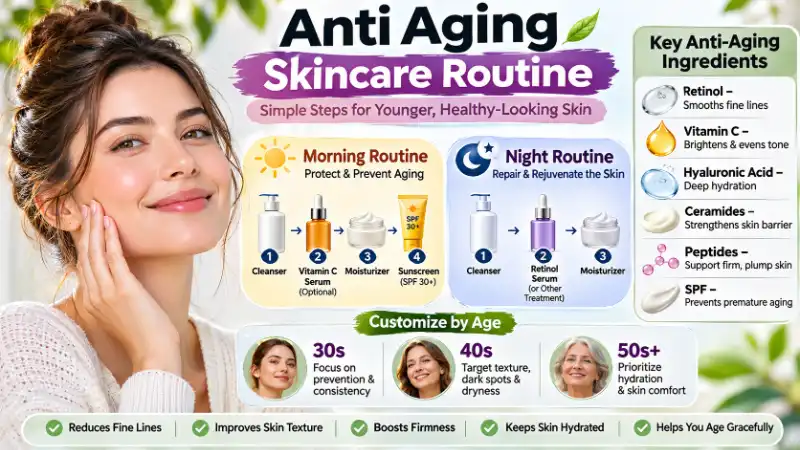
The best anti aging skincare routine doesn’t have to be expensive or complicated. Start with a gentle cleanser, moisturizer, and broad-spectrum SPF 30 or higher sunscreen. You can add vitamin C in the morning or retinol at night if your skin needs them.
The goal isn’t to stop aging. It’s to protect your skin, improve concerns you can treat, and keep it healthy as you get older.
Here’s how to build a routine that fits your skin, age, and budget.
FIND YOUR AGE - IN YEARS, MONTHS, DAYS, HOURS & SECONDS!
What Does Your Skin Actually Need to Look Healthier as You Age?
Before buying anti-aging products, figure out what you’re trying to improve.
As you age, your skin naturally changes. Collagen and elastin help keep skin firm and flexible, but their levels and structure change over time. Your skin may become drier, thinner, or less elastic.
Sun exposure can speed up some of these changes. This is called photoaging. It can lead to wrinkles, dark spots, and uneven skin tone.
A skincare routine can help prevent some damage and improve the appearance of certain concerns. But creams cannot completely remove deep wrinkles or restore all lost skin firmness.
Identify Your Main Skin Concern Before Buying Anything
Different skin concerns need different solutions.
| Your Skin Concern | What May Help |
|---|---|
| Fine lines | Moisturizer, sunscreen, retinoids |
| Dark spots | Sunscreen, vitamin C, suitable targeted treatments |
| Dry or rough skin | Ceramides, glycerin, hyaluronic acid |
| Uneven texture | Retinoids or carefully selected exfoliants |
| Dull-looking skin | Moisturizer, vitamin C, gentle skincare |
| Acne and early aging | Non-comedogenic products, suitable retinoids |
Don’t try to treat everything at once.
For example, if dryness is making your fine lines more noticeable, improving hydration may be a better first step than buying an expensive wrinkle serum.
Start with one main concern. Then build a routine around it.
The Morning Anti-Aging Routine: Protect Your Skin in Four Steps
Your morning skincare routine should prepare your skin for the day and protect it from sun damage.
Here’s the right order:
Cleanser → Vitamin C serum (optional) → Moisturizer → Sunscreen
Step 1 — Cleanse Without Stripping Your Skin
Wash your face with a gentle cleanser and lukewarm water.
A good cleanser removes excess oil, sweat, and leftover products without leaving your skin feeling tight.
If you have dry or sensitive skin, rinsing with water in the morning may be enough. Oily skin may benefit from a gentle face wash.
Avoid rough facial scrubs and harsh soaps. They can irritate your skin and weaken its protective moisture barrier.
Step 2 — Add a Vitamin C Serum If Your Skin Needs It
Vitamin C is an antioxidant that can help with uneven skin tone and visible signs of sun damage.
It may also support collagen production.
After cleansing, apply a small amount of vitamin C serum according to the product instructions.
You don’t need vitamin C to have a good anti-aging routine. It’s an optional treatment, especially useful when dullness or dark spots are your main concerns.
If your skin is sensitive, choose a gentle formula and introduce it slowly.
Remember, vitamin C does not replace sunscreen.
Step 3 — Choose a Moisturizer for Your Skin Type
Moisturizer helps your skin hold water and makes some fine lines look less noticeable.
Look for ingredients such as:
- Ceramides: Help support the skin barrier.
- Hyaluronic acid: Helps attract and retain moisture.
- Glycerin: Draws water into the outer skin layers.
- Squalane: Helps soften skin and reduce moisture loss.
Choose a lightweight lotion or gel-cream if your skin is oily. A richer cream may feel better on dry or mature skin.
Even oily skin needs moisture.
Step 4 — Finish With Broad-Spectrum SPF 30+ Sunscreen
If you only make one change to your skincare routine, make daily sunscreen a priority.
Sun exposure is a major cause of premature skin aging. Broad-spectrum sunscreen protects against both UVA and UVB rays.
Choose SPF 30 or higher, preferably water-resistant if you’re spending time outdoors.
Apply enough sunscreen to cover your face, ears, neck, and other exposed skin. The American Academy of Dermatology recommends about one teaspoon for the face alone.
Reapply approximately every two hours while outdoors, and after swimming or sweating.
Mineral sunscreens contain zinc oxide, titanium dioxide, or both. Chemical sunscreens use other approved UV filters. The best option is one you can use correctly and consistently.
Morning routine summary: Cleanse, apply optional vitamin C, moisturize, and finish with sunscreen.
The Night Anti-Aging Routine: Treat and Moisturize in the Right Order
Your nighttime skincare routine is when you can focus on targeted treatments without the need to layer daytime sunscreen over them.
You don’t need a complicated ten-step routine.
Night skincare routine steps: Cleanser → Optional treatment → Moisturizer
Step 1 — Remove Sunscreen, Makeup, and Daily Buildup
Cleanse your face before bed to remove makeup, sunscreen, oil, and dirt.
If you wear heavy makeup or water-resistant sunscreen, a cleansing balm or oil followed by a gentle cleanser may help.
This is called double cleansing. It’s useful for some people, but it isn’t required for everyone.
Your skin should feel clean, not dry or uncomfortable.
Step 2 — Apply Your Night Treatment Only When Appropriate
Retinol is a common nighttime anti-aging treatment.
It belongs to a family of vitamin A derivatives called retinoids. These ingredients can help improve fine lines, uneven texture, and some forms of acne.
But don’t start with daily use.
If retinol is appropriate for your skin, begin slowly and follow the product directions. Let your skin adjust before increasing how often you use it.
On nights when you’re not using retinol, you can skip the treatment step and simply moisturize.
Step 3 — Moisturize to Support Your Skin Barrier
Finish with a moisturizer suited to your skin type.
If retinol makes your skin dry, a fragrance-free moisturizer containing ceramides or glycerin may help.
You don’t need a separate product labeled “anti-aging night cream.” A regular moisturizer can work well.
Night routine summary: Clean your face, apply a suitable treatment if needed, and moisturize.
How to Use Retinol and Anti-Aging Serums Without Irritating Your Skin
Retinol can be useful, but using too much too soon can make your skin red, flaky, or uncomfortable.
The key is choosing the right product and introducing it carefully.
Retinol vs. Retinoids: Which Should Beginners Consider?
Retinoids are a group of vitamin A-related ingredients. They include retinol, retinal (retinaldehyde), adapalene, and prescription tretinoin.
They aren’t all the same.
- Retinol: Available in many over-the-counter skincare products. Often a reasonable starting option.
- Retinal: Another vitamin A derivative found in some over-the-counter products.
- Adapalene: Commonly used for acne treatment.
- Tretinoin: A prescription retinoid with established evidence for photoaging treatment.
A stronger product isn’t always the better choice. Your skin needs to tolerate the treatment for it to be useful.
If you’re new to retinoids, consider a gentle formulation and ask a dermatologist for advice when needed.
Important: Avoid retinoids during pregnancy or when trying to become pregnant. If you’re breastfeeding, ask your healthcare professional before using one.
How Often Should You Apply Retinol at First?
For a beginner using a suitable over-the-counter retinol, a cautious starting plan may look like this:
| Period | Suggested Approach |
|---|---|
| Weeks 1–2 | Try two nonconsecutive nights per week |
| Weeks 3–4 | Continue or increase slowly if comfortable |
| After week 4 | Adjust based on tolerance and product instructions |
This is an example, not a schedule everyone must follow.
Apply a pea-sized amount for the entire face, unless your product instructs otherwise. Keep it away from your eyelids, lips, and corners of your nose unless specifically directed.
Use it at night and maintain sun protection during the day.
If your skin becomes very irritated, stop the treatment and let your skin recover. Persistent burning, swelling, or severe irritation needs medical advice.
How to Layer Anti-Aging Serum With Moisturizer
Wondering how to layer anti-aging serum in your skincare routine?
A simple rule is to apply treatment products after cleansing and before moisturizer, unless the product directions say otherwise.
For example:
Morning: Cleanser → Vitamin C serum → Moisturizer → Sunscreen
Night: Cleanser → Retinol → Moisturizer
A hydrating serum containing hyaluronic acid can fit before your moisturizer, but it isn’t essential.
If retinol irritates your skin, you can ask your dermatologist whether applying moisturizer before and after retinol, sometimes called the retinol sandwich method, is suitable.
You don’t need every serum available. One targeted product is usually a better place to start than several new treatments together.
Which Ingredient Combinations Need Extra Care?
Some ingredients can cause irritation when combined, particularly if you’re new to skincare.
Be careful with retinoids and strong exfoliating acids, such as glycolic acid (an AHA) or salicylic acid (a BHA).
These ingredients aren’t always incompatible, but using several active products together increases your chance of dryness and irritation.
Niacinamide is generally well tolerated and may support the skin barrier. Peptides appear in many anti-aging products, although their benefits depend on the specific formula and supporting evidence.
Azelaic acid may help certain acne and pigmentation concerns, but it should be selected for a specific need rather than added automatically.
Introduce one new active product at a time. That makes it easier to identify what’s causing a reaction.
How to Adjust Your Anti-Aging Routine in Your 30s, 40s, and 50s
Your age can help you understand common skin changes, but it shouldn’t control every product you buy.
Your skin type, sun exposure, and main concerns matter more than a birthday.
In Your 30s — Focus on Prevention and Consistency
An anti aging skincare routine for your 30s should focus on protecting the skin and managing early changes.
You may notice fine lines around your eyes, dullness, or uneven skin tone.
Start with daily sunscreen, a gentle cleanser, and moisturizer.
If you have a specific concern, vitamin C or a suitable retinol may be helpful.
You don’t need an expensive routine just because you’ve turned 30.
In Your 40s — Address Texture, Dark Spots, and Dryness
The best anti aging skincare routine for your 40s may need to address several changes at once.
Skin can become drier, fine lines may deepen, and existing sun damage may become more noticeable.
Keep sunscreen as your main daytime protection.
Consider a richer moisturizer if your skin feels dry. A suitable retinoid may help with fine lines and texture, while vitamin C or another targeted treatment may help uneven tone.
Avoid adding several strong products at once.
In Your 50s and Beyond — Put Skin Comfort First
An anti aging skincare routine in your 50s often benefits from extra attention to hydration.
Hormonal changes, including menopause, can affect skin moisture and comfort.
Choose gentle cleansers and moisturizers that support the skin barrier.
Retinoids can still be useful if your skin tolerates them, but don’t force a treatment that causes persistent irritation.
The goal is healthier, more comfortable skin, not chasing every wrinkle.
What If You Have Acne, Sensitive Skin, or Specific Skin Concerns?
A standard skincare routine may need adjustments if you have ongoing acne, sensitivity, or irritation.
Here’s how to keep things manageable.
Anti-Aging Skincare When You Still Have Acne
Yes, you can have acne and signs of aging at the same time.
An acne anti aging skincare routine should avoid heavy or irritating products that make breakouts worse.
Choose a gentle cleanser, non-comedogenic moisturizer, and sunscreen.
Some retinoids can help both acne and fine lines, although the specific product matters.
If you’re already using benzoyl peroxide, salicylic acid, or prescription acne treatments, check with your dermatologist before adding retinol.
A Gentler Routine for Dry or Sensitive Skin
Sensitive skin needs fewer products, not more.
Start with a fragrance-free cleanser, moisturizer, and sunscreen.
Introduce new treatments one at a time. Patch testing can help you spot reactions before applying a product across your face.
If you have eczema, rosacea, or frequent skin irritation, seek personalized advice before trying stronger anti-aging ingredients.
Don’t keep using a product that causes significant burning just because someone says it’s supposed to work.
Do Men’s Skin, Neck, and Hands Need a Different Routine?
A men’s anti aging skincare routine follows the same basic principles: cleanse, moisturize, and protect from the sun.
Shaving may create an extra concern. If shaving irritates your face, use gentle products and avoid applying irritating treatments immediately afterward.
Your neck and hands also receive sun exposure and can show signs of aging.
Apply sunscreen to exposed areas and moisturize them regularly.
You don’t automatically need separate anti-aging neck products or expensive hand treatments.
Build an Affordable Anti-Aging Routine Without Buying Too Much
You can build an affordable anti aging skincare routine with basic drugstore products.
You don’t need to buy an entire skincare collection.
The Three Essential Products Worth Starting With
Start with these:
- Gentle cleanser: Removes dirt, sunscreen, and excess oil.
- Moisturizer: Keeps skin hydrated and supports its barrier.
- Broad-spectrum SPF 30+ sunscreen: Helps protect against UV-related aging.
These three products form a simple anti aging skincare routine.
If your skin is comfortable and you want to address a specific concern, consider adding one treatment product.
You can also use a moisturizer with SPF 30 or higher, as long as you apply enough for proper protection.
How to Choose a Serum, Kit, or Drugstore Product
If you’re looking for the best anti aging skincare routine kit to purchase, don’t choose based only on the number of products included.
Check the ingredients and ask whether you’ll actually use everything.
A kit with a cleanser, moisturizer, sunscreen, and suitable treatment may be useful. But a kit containing several strong exfoliants and retinoids can be too much for beginners.
Look for products that match your skin type and budget.
Buy from trustworthy sellers, check expiration dates, and avoid products making unrealistic promises.
You can save money by skipping unnecessary toners, multiple serums, and duplicate moisturizers.
Are Korean, Natural, and Branded Routines Better?
A Korean skincare routine for anti-aging may focus on hydration, gentle layering, and sun protection. Some routines include many steps, but you don’t need all of them to get benefits.
A natural anti aging skincare routine might include mild cleansers and simple moisturizers. However, natural ingredients aren’t automatically safer. Essential oils and plant extracts can also irritate skin.
Brands such as La Roche-Posay and SkinCeuticals sell products used in anti-aging routines. Their formulas differ, and a brand name alone doesn’t tell you whether a product suits your skin.
Whether you’re choosing a Korean routine, a natural approach, or a branded skincare set, focus on the ingredients, your needs, and the evidence behind the claims.
How Long Should You Follow an Anti-Aging Routine Before Changing It?
One of the biggest skincare mistakes is switching products before giving them enough time.
Some benefits appear quickly. Others take weeks or months.
Can You See Anti-Aging Results in Two Weeks?
A two-week anti aging skincare routine may make your skin feel softer and look more hydrated.
Moisturizer can temporarily make fine lines less visible by improving hydration.
But meaningful changes in wrinkles, dark spots, or texture usually take longer.
The American Academy of Dermatology explains that many anti-aging products need at least six weeks to show results, and some take up to three months.
Don’t expect a cream to erase deep wrinkles in 14 days.
When Should You Change a Product or See a Dermatologist?
If your routine is comfortable and your skin is gradually improving, there’s usually no need to keep changing it.
Review your routine when:
- Your skin becomes unusually dry or irritated.
- A new product causes persistent breakouts or discomfort.
- Your skin needs change with the weather or age.
- A suitable treatment hasn’t helped after a reasonable trial.
- You develop a new or changing skin spot, especially one that bleeds, changes shape, or doesn’t heal.
Take progress photos under similar lighting if you want to track subtle changes.
You don’t need to update your anti-aging skincare routine every month.
And if a treatment causes severe irritation, don’t continue using it just to complete a planned trial.
Frequently Asked Questions About Anti-Aging Skincare
At What Age Should You Start an Anti-Aging Skincare Routine?
You can start protecting your skin from sun damage long before you notice wrinkles. Sunscreen, gentle cleansing, and moisturizing are useful at many ages. There is no fixed age when everyone needs retinol. Consider targeted anti-aging treatments only when you have a suitable concern and the product is appropriate for your skin.
Can You Follow a Simple Anti-Aging Routine Without Retinol?
Yes. A simple routine with cleanser, moisturizer, and daily sunscreen can help maintain healthy skin and reduce UV-related premature aging. Retinol is an optional treatment for certain concerns, not a requirement for healthy skin. If retinol irritates your skin, ask a dermatologist about alternatives instead of forcing yourself to use it.
Do You Need a Separate Eye Cream or Night Cream?
Not necessarily. A gentle moisturizer may be enough for both your face and the skin around your eyes, as long as it is suitable for that area. A separate eye cream or night cream can be helpful for specific needs, but it isn’t required simply because you’re building an anti-aging routine.
Can Skincare Completely Remove Deep Wrinkles?
No. Skincare may soften the appearance of fine lines and improve dryness, texture, or some pigmentation concerns. However, deep wrinkles and significant skin sagging usually cannot be fully corrected with topical products. A board-certified dermatologist can explain what results are realistic and whether other treatments are appropriate.
Your Next Step: Keep the Routine Simple and Consistent
The best anti aging skincare routine is one you can follow without making your skin uncomfortable or spending more than you need.
Start with a gentle cleanser, moisturizer, and daily broad-spectrum sunscreen. Add vitamin C or a suitable nighttime retinoid only when it addresses a real skin concern.
Don’t worry about owning every trending serum or expensive anti-aging cream.
Pay attention to how your skin responds, give suitable products enough time, and make changes when your skin needs them.
Healthy-looking skin comes from consistent care, not the longest product list.
Medical and Dermatology Sources
- American Academy of Dermatology — How to Select Anti-Aging Skin Care Products
- American Academy of Dermatology — Retinoid or Retinol?
- American Academy of Dermatology — How to Maximize Results From Anti-Aging Skin Care Products
- Cleveland Clinic — Best Ingredients and Products for Your Anti-Aging Skin Care Routine
- American Academy of Dermatology — Skin Care in Your 40s and 50s
This article provides general skincare information and does not replace personalized medical advice.
BMI & BMR CALCULATOR - CHECK YOUR HEALTH